VIVOSUN AeroLight 2026: Beyond Higher Wattage, What’s New?
A great grow light does more than deliver power. It brings together light distribution, optical design, spectrum control, and airflow to create a lighting setup that works with the needs of your plants.
That’s the thinking behind the VIVOSUN AeroLight 2026 series.
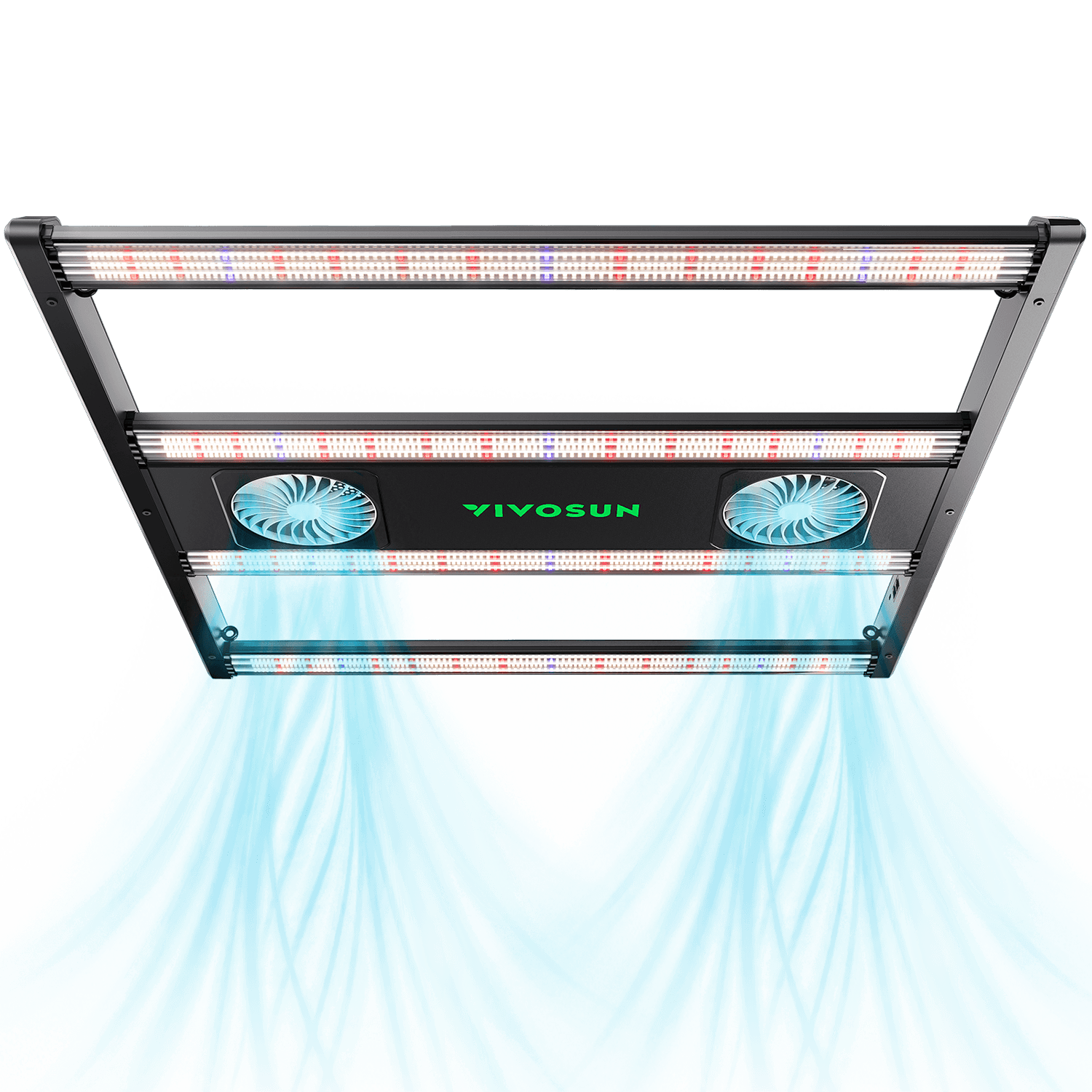
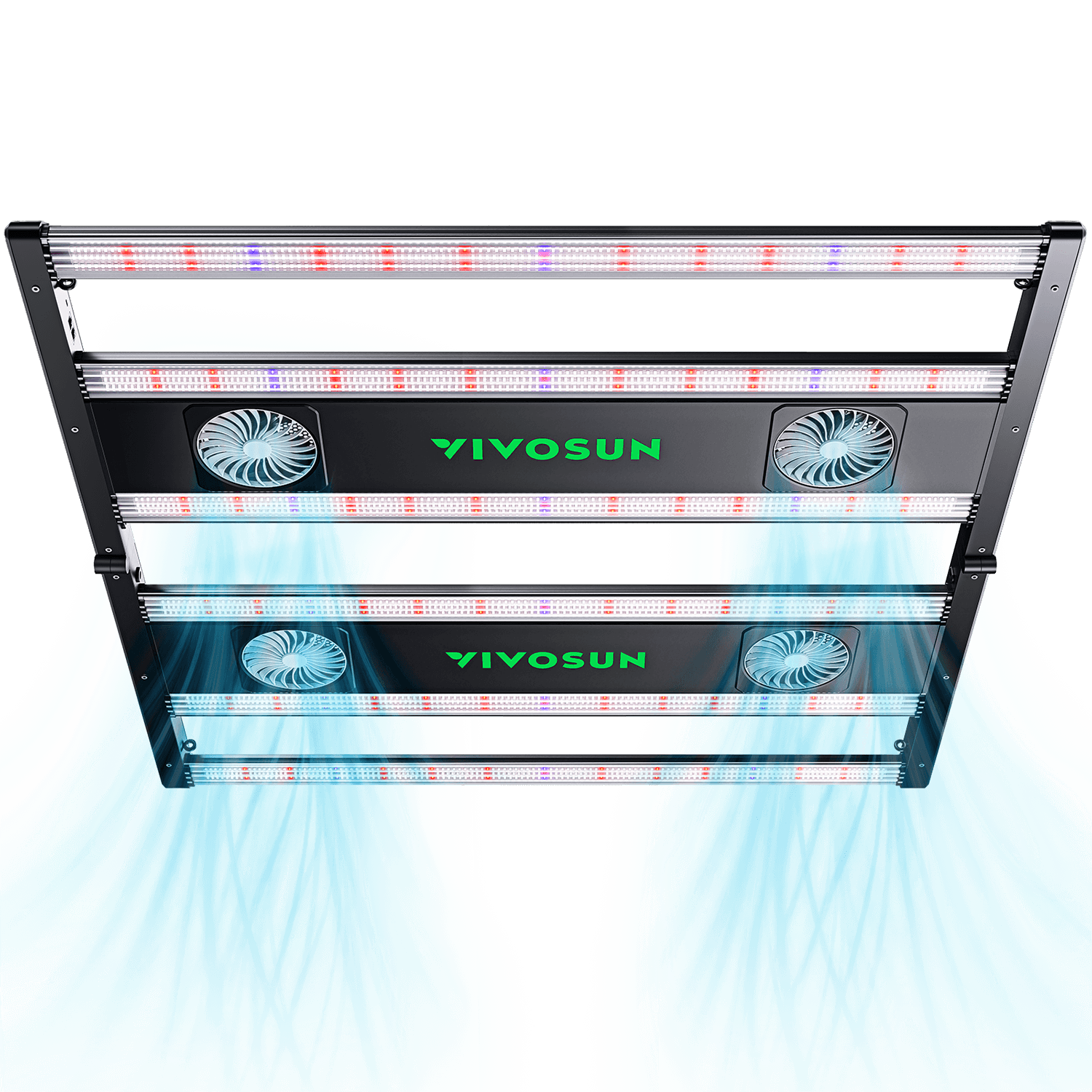
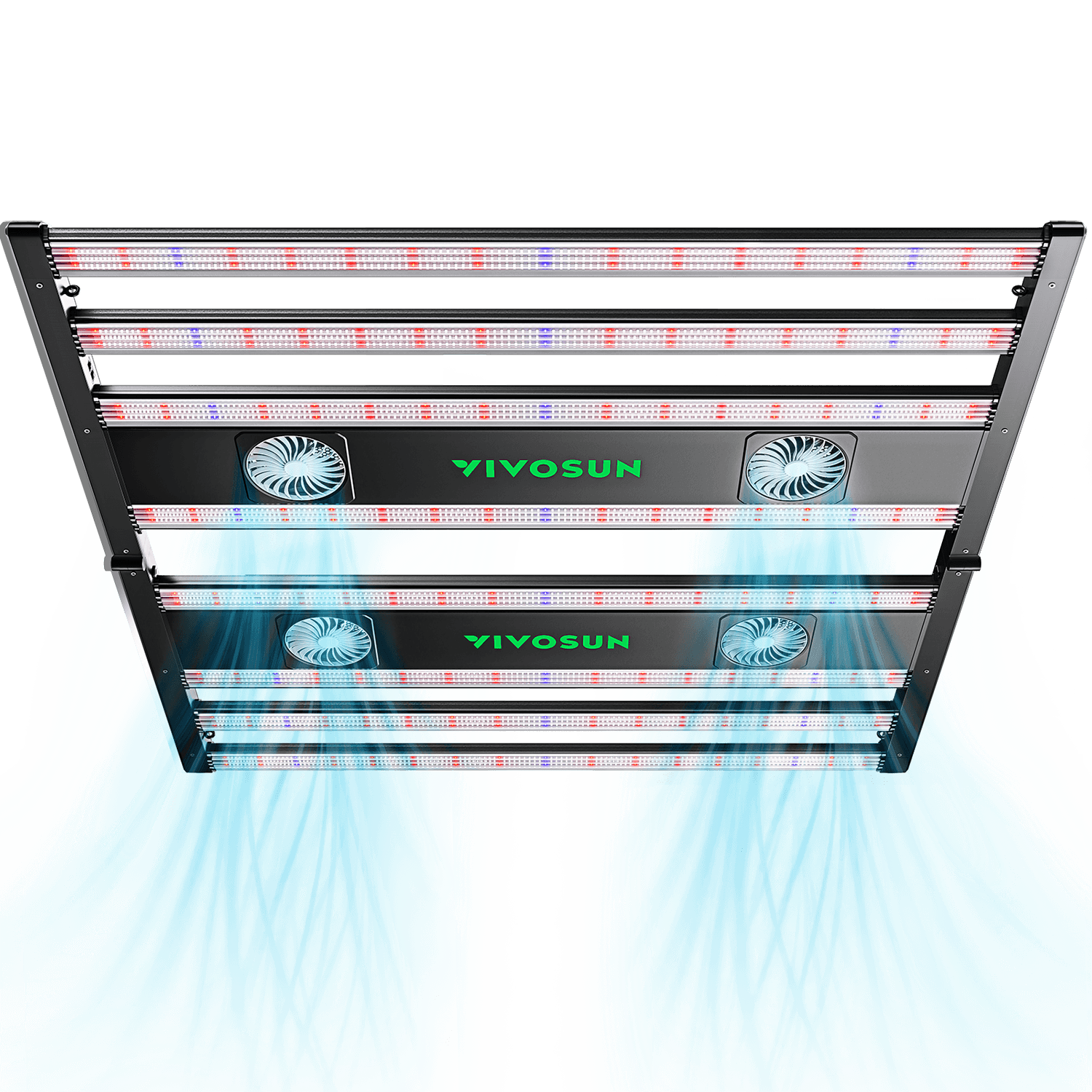
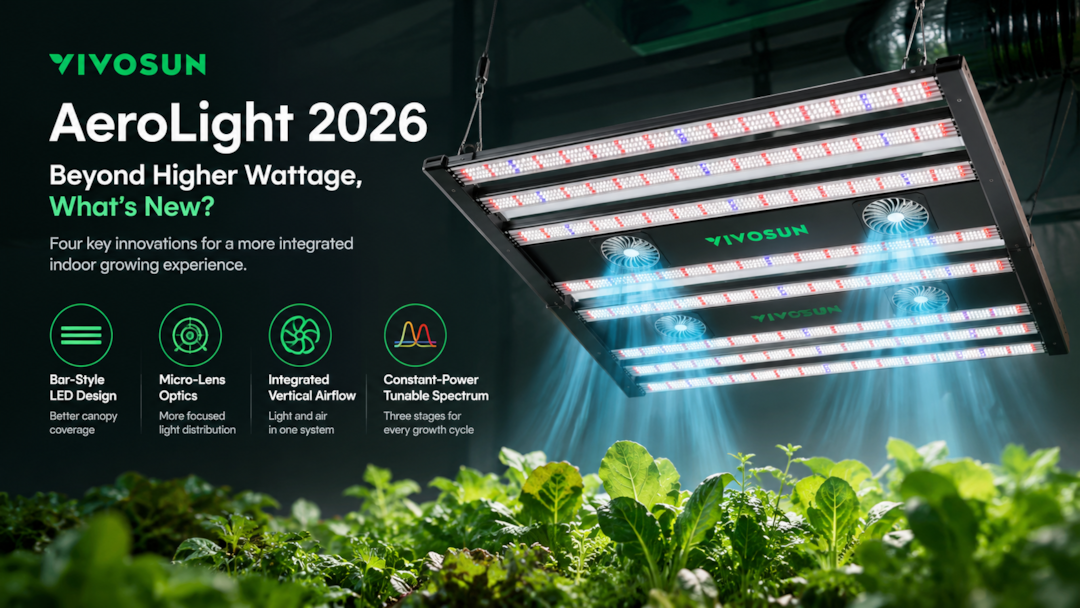
Building on the AeroLight concept of integrating lighting and airflow, the 2026 lineup introduces a bar-style LED design alongside micro-lens optics, integrated vertical airflow, and tunable spectrum. Together, these features give growers a more integrated approach to managing light and air in an indoor growing environment.
So, what’s new beyond wattage? And how do these innovations translate into practical benefits for your grow?
Let’s explore the four key features behind the AeroLight 2026 series.
What’s New in the VIVOSUN AeroLight 2026 Series?
The AeroLight 2026 series brings together four key design features:
| Feature | What’s New | Why It Matters |
|---|---|---|
| Bar-Style LED Design | An extended LED-bar layout across the fixture | Designed with canopy coverage and light distribution in mind |
| Micro-Lens Optics | An optical system engineered to shape light distribution | Supports more purposeful delivery of light toward the growing area |
| Integrated Vertical Airflow | A central circulation fan integrated into the lighting fixture | Combines two important parts of the growing environment in one system |
| Constant-Power Tunable Spectrum | Seedling, Vegetative, and Flowering spectrum settings | Gives growers flexibility to adjust the lighting spectrum for different growing stages |
These features address different aspects of indoor growing. The LED layout shapes the lighting arrangement, the optics influence how light travels, the integrated fan adds air circulation, and spectrum controls provide another way to adapt the lighting setup throughout the growing cycle.
The result is a grow-light design that considers more than electrical power alone.
1. Why Did AeroLight 2026 Adopt a Bar-Style Design?
The AeroLight product family includes different fixture designs for different growing spaces. The original AeroLight 120W, 180W, and 240W AeroLight models use a board-style LED design. The AeroLight 2026 models—320W, 350W, 550W, and 850W—use a bar-style layout. This distinction is about fixture design, not a universal ranking of one design over the other.
Board Light and Bar Light: What’s the Difference?
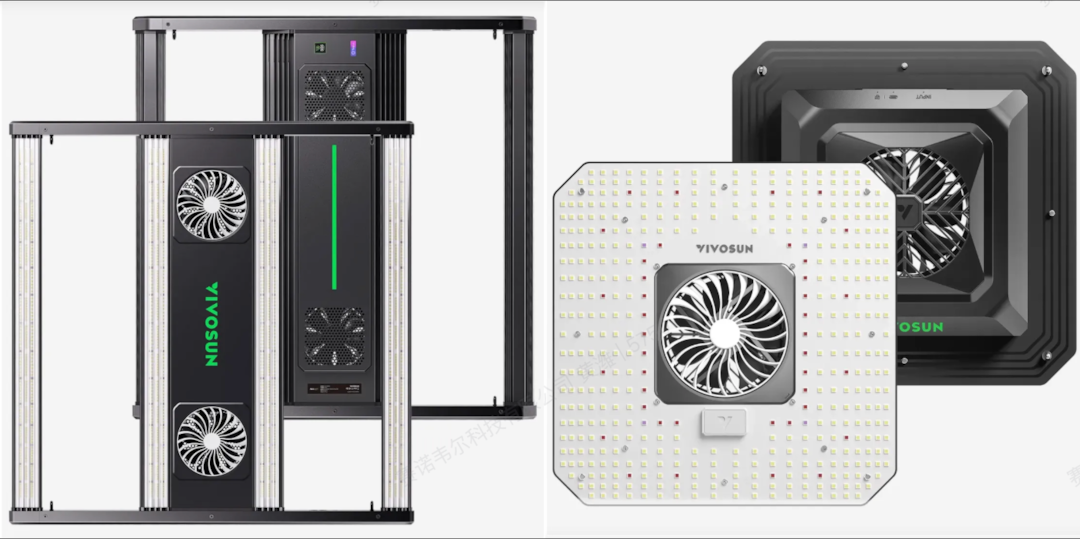
A board-style fixture places its LEDs across one or more relatively compact boards. A bar-style fixture distributes LEDs along multiple elongated light bars. Because the LEDs occupy different physical layouts, the two designs can distribute light differently across a growing area. The actual result depends on the fixture’s dimensions, LED placement, optical components, mounting height, and the size of the area being illuminated. For growers, the important question isn’t simply whether a light uses bars or boards. It’s whether the fixture delivers an appropriate distribution of light across the intended canopy. A compact fixture may be suitable for a smaller growing area, while a larger fixture may need a different LED layout to address a wider canopy. The right choice depends on the specific model and growing setup.
Why Light Distribution Matters
Plants receive light across their leaves, so the distribution of light across the canopy matters alongside the total output of a fixture.
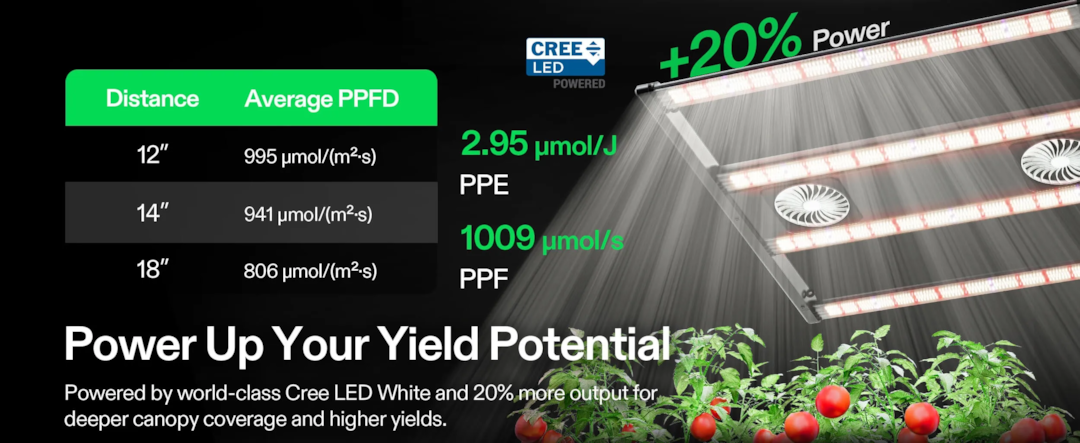
University of Missouri Extension identifies light quality, intensity, uniform coverage, and cost as important factors when selecting grow lights for controlled-environment agriculture. This is why a grow light should not be evaluated by wattage alone. Imagine two fixtures with similar power ratings. One might produce a strong reading directly beneath its center, while the other distributes light differently across the growing area. The center reading alone would not tell you which fixture provides the more suitable coverage for your plants. A photosynthetic photon flux density (PPFD) map helps answer that question by showing how light intensity varies across a measured area at a specified distance from the fixture. For growers, the practical takeaway is simple: compare the coverage area and PPFD distribution of the actual models you are considering, rather than assuming that a particular fixture shape automatically guarantees better results.
2. Micro-Lens Optics: What Does It Add?
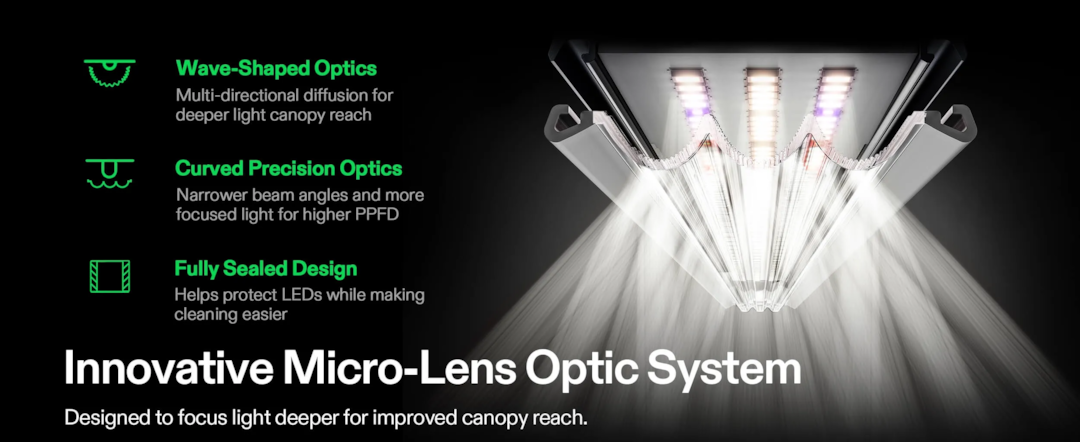
AeroLight 2026 combines its bar-style LED layout with an advanced micro-lens optical system. To understand why this matters, it helps to separate two aspects of grow-light design: generating light and distributing it. The LEDs generate the light. The optical system influences how that light travels away from the fixture and reaches the growing area.
How Optical Design Shapes Light
Optical elements influence the direction and distribution of emitted light. In horticultural lighting, their purpose is to help shape how light reaches the intended growing area.
The objective is not simply to concentrate light into the brightest possible central spot. Growers need a lighting distribution suited to the canopy, with light reaching the area where plants are growing.
VIVOSUN’s AeroLight 2026 design incorporates micro-lens optics as part of this approach to light delivery.
The micro-lens system works alongside the bar-style LED arrangement, bringing optical engineering into the overall fixture design.
Why This Matters for Indoor Growing
The distribution of light across a canopy affects the lighting conditions individual leaves experience.
When evaluating a fixture, growers should consider how light is distributed across the intended growing area rather than relying on wattage or a single peak PPFD value.
PPFD maps help illustrate this distribution. When combined with consistent measurement conditions, they can show how the lighting intensity varies between the center and outer portions of a canopy.
The importance of measuring light at the growing surface is also explained in Iowa State University Extension’s guide to supplemental lighting for indoor plants.
Optical Design as Part of a Complete System
The micro-lens optics are one component of the AeroLight 2026 lighting system. Their role should be understood alongside the LED arrangement, fixture dimensions, operating settings, and intended coverage area.
For growers, this integrated approach makes the overall design more relevant than any single specification in isolation.
The goal is a lighting system designed around how light is delivered to the growing area—not just how much electrical power the fixture consumes.
3. Integrated Vertical Airflow: Lighting Meets Air Circulation
Healthy indoor growing environments depend on more than light. Air movement, temperature, humidity, and carbon dioxide availability also influence plant development.
The AeroLight design brings lighting and air circulation together in one fixture, helping growers consider these needs as part of a more integrated setup.
Why Airflow Matters Around Plants
Air movement helps distribute heat and water vapor around the canopy.
A thin layer of relatively still air forms around leaf surfaces. This is known as the boundary layer. Air movement can influence heat transfer and the exchange of water vapor and carbon dioxide between leaves and their surroundings.
In a dense canopy, leaves may experience different local conditions from the surrounding air. Appropriate circulation helps move air through the growing space and reduce stagnant areas.
University greenhouse guidance explains that air circulation helps mix air around the canopy, supports gas exchange near leaf surfaces, and promotes more consistent temperature and humidity conditions. See University of Massachusetts Amherst’s guide to horizontal airflow in greenhouses.
For indoor growers, airflow is therefore an important part of managing the environment around plants.
How AeroLight Integrates Airflow
The AeroLight bar-style models combine LED lighting with a central circulation fan.
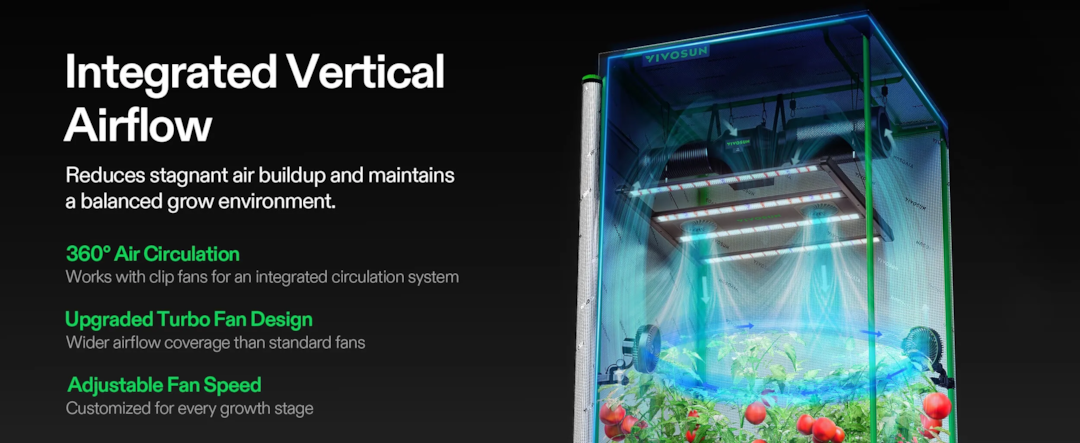
According to VIVOSUN’s published manual for the 320W, 350W, 550W, and 850W bar-style models, the listed fan speed is 2,600 RPM and the listed airflow is 104 CFM.
By combining lighting and circulation in one fixture, AeroLight integrates two functions into a single piece of equipment.
For growers, this can simplify equipment planning and reduce the need to position a separate circulation fan for the same purpose. It also provides an opportunity to coordinate lighting placement and local airflow within the growing space.
Check Out How AeroLight Enhancing CO2 and Air Distribution
Supporting a More Integrated Growing Environment
Lighting and airflow work together within the wider growing environment.
The fixture delivers light to the canopy, while its integrated fan circulates air around the growing area. Growers can then coordinate this with their ventilation, temperature management, humidity control, and other equipment.
It’s important to distinguish circulation from ventilation. Circulation moves air within the growing space; ventilation exchanges air with the outside environment. A complete grow-tent setup may still require exhaust or ventilation equipment to manage heat, humidity, and air exchange.
For a clear explanation of the difference, see University of Vermont Extension’s guide to greenhouse and high-tunnel ventilation.
The benefit of integrated airflow is that circulation becomes part of the lighting fixture itself, making it easier to consider both functions when planning an indoor growing setup.
4. Constant-Power Tunable Spectrum: Understanding What You Can Adjust
Plants respond to light in more ways than simply using it as an energy source. Different wavelengths can influence photosynthesis, plant shape, leaf expansion, and flowering responses. The effects depend on the plant species, developmental stage, light intensity, and the combination of wavelengths being supplied. This is one reason horticultural lighting systems may use more than a single fixed light spectrum.
Why Does Spectrum Matter?
Photosynthetically active radiation (PAR) is conventionally defined as light in the 400–700 nm wavelength range. Within this range, blue, green, and red light contribute to photosynthesis and can influence plant growth, development, and morphology in different ways. Light outside this range, including far-red and ultraviolet wavelengths, can also influence specific plant responses. Research published in HortScience explains how light spectrum influences plant growth, morphology, and quality, highlighting that different wavelengths can trigger different physiological responses rather than serving a single, universal purpose.
For example:
Blue light (approximately 400–500 nm) contributes to photosynthesis and can influence leaf development, stomatal responses, and plant architecture.
-
Green light (approximately 500–600 nm) contributes to photosynthesis and can penetrate deeper into some plant canopies than strongly absorbed wavelengths.
-
Red light (approximately 600–700 nm) is an important driver of photosynthesis and can influence plant development.
-
Far-red light (approximately 700–800 nm) can influence stem elongation, leaf expansion, and flowering responses, depending on the plant species and the surrounding light environment.
-
Ultraviolet light (below 400 nm) can influence plant defense responses and secondary metabolite production, although its effects depend on wavelength, intensity, exposure duration, and plant species.
These effects are not universal. The same spectral treatment can produce different results in different crops, and plant responses depend on the combination of spectrum, light intensity, photoperiod, and growing conditions.
The key takeaway: Spectrum determines the composition of light, while light intensity determines how many photons reach the plant. Understanding both is essential when choosing a grow light for different stages of plant development.
Scientific reference: LED Lighting: A Grower’s Guide to Light Spectra, HortScience.
Tunable Spectrum Across Growth Stages
Plants have different lighting priorities as they develop. Seedlings need conditions that support healthy establishment, vegetative plants require light for continued leaf and stem development, and flowering plants may respond differently to spectral composition and photoperiod.
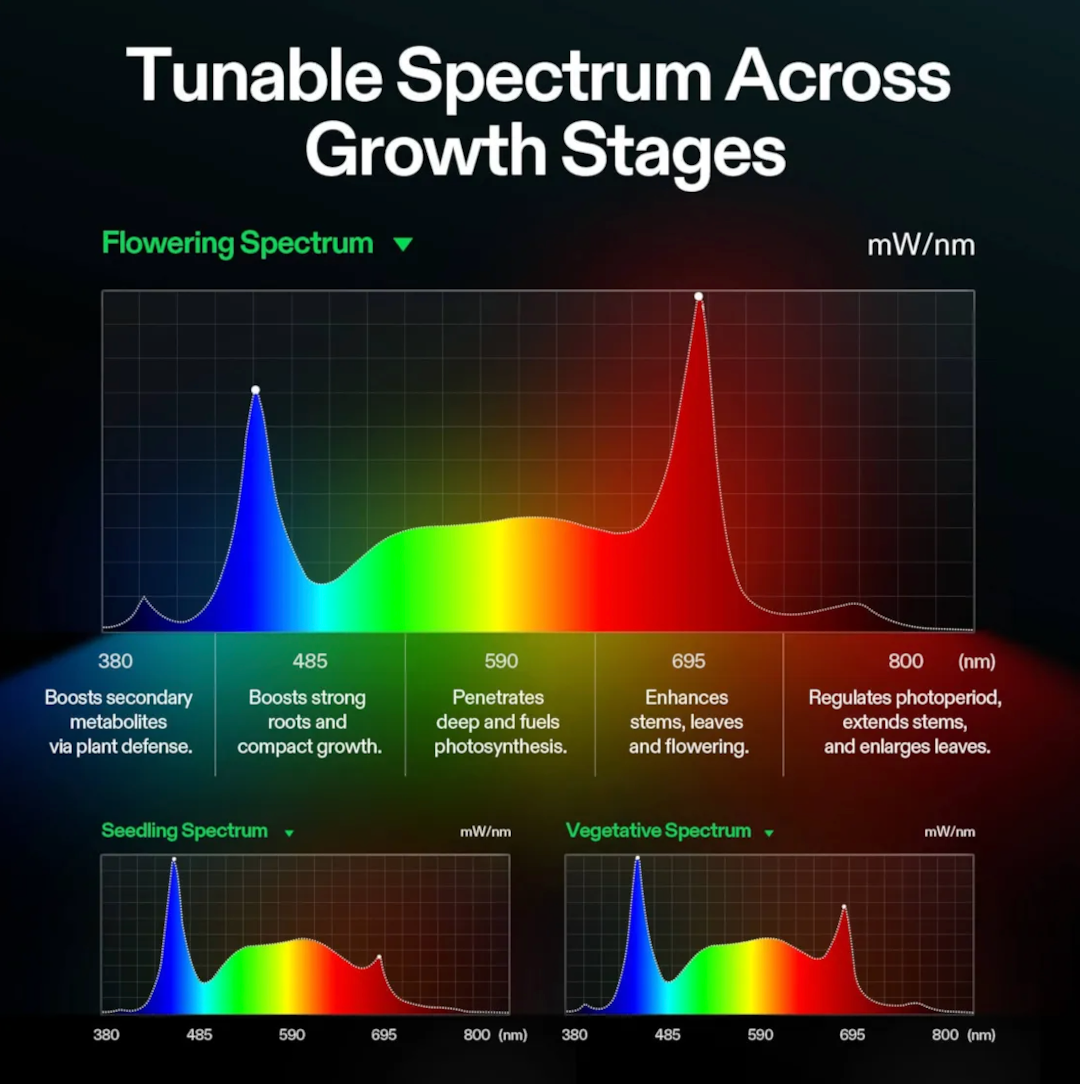
AeroLight offers three dedicated spectrum settings—Seedling, Vegetative, and Flowering—designed to help growers adapt their lighting to different stages of plant development.
- Seedling Spectrum: Support Early Growth
-
The seedling stage establishes the foundation for later plant development. During this period, light conditions can influence seedling structure, leaf development, and overall growth. Blue light can contribute to compact plant architecture, although the response depends on the species, light intensity, and the balance of other wavelengths. Red light also contributes to photosynthesis and early plant development. AeroLight’s Seedling Spectrum is designed for early-stage growing, with the goal of supporting healthy seedling establishment and balanced development.
Designed for: Seedlings and young plants.
Growing goal: Support early development and healthy plant structure.
- Vegetative Spectrum: Support Leaf and Stem Development
-
During vegetative growth, plants develop leaves, stems, and the canopy needed to capture light and support future growth. Red and blue wavelengths both contribute to photosynthesis, while green light can contribute to photosynthesis deeper within some plant canopies. The relative effects of these wavelengths depend on plant species, canopy structure, and total light intensity. AeroLight’s Vegetative Spectrum is designed to support the lighting needs of actively growing plants, with an emphasis on leaf development, stem growth, and photosynthetic activity.
Designed for: Plants in the active vegetative stage.
Growing goal: Support continued leaf and stem development.
- Flowering Spectrum: Support Reproductive Development
-
When plants enter the reproductive stage, their responses to light can involve more than photosynthesis alone. Red and far-red light can influence flowering responses in certain species. However, the effects depend on the plant’s photoperiod sensitivity, the ratio of different wavelengths, and the timing and duration of exposure. For some crops, the length of the uninterrupted dark period is especially important. AeroLight’s Flowering Spectrum is designed to adapt light composition for plants in the flowering stage.
Designed for: Flowering and fruiting plants, where the selected spectrum is appropriate for the crop.
Growing goal: Tailor spectral conditions to reproductive development.
What Makes Constant-Power Spectrum Tuning Important?
Changing a light’s spectrum can involve adjusting the output of different wavelength channels. Depending on the fixture design, these adjustments may also affect total light output or electrical consumption.
The AeroLight’s constant-power spectrum feature is intended to maintain a consistent power level as growers switch between spectrum settings.
This is an important distinction in lighting control: spectrum flexibility and power management are designed to work together.
Electrical power, total photon output, and light intensity at the canopy are different measurements:
- Electrical power (W): The electrical power consumed by the fixture.
- PPF (μmol/s): The total photosynthetic photon output per second.
- PPFD (μmol/m²/s): The photosynthetic photon flux reaching a square meter each second at a specified measurement plane.
- PPE (μmol/J): The photosynthetic photon output relative to electrical energy consumed.
Constant electrical power does not necessarily mean identical PPF or PPFD across all spectrum settings. Each describes a different aspect of the fixture’s performance.
For a practical introduction to PPF, PPFD, and the relationship between light output and plant lighting requirements, see Iowa State University Extension’s guide to supplemental lighting for indoor plants.
For AeroLight, the constant-power feature is best understood in terms of how the fixture manages power across the available settings, while photon output can be considered separately when comparing lighting performance.
Why Spectrum Flexibility Matters to Growers
A grower’s lighting needs can change throughout the growing cycle. Spectrum controls provide a way to adapt the lighting profile as plants move from early growth to vegetative development and flowering.
Rather than treating spectrum as a fixed characteristic of a fixture, AeroLight gives growers dedicated settings for different stages.
A spectrum graph can make these differences easier to understand. Showing the three profiles together allows readers to see how the spectral distribution changes between settings.
The HortScience review of LED lighting spectra discusses how different wavelength regions can influence plant responses and why the appropriate spectrum depends on the crop and desired outcome.
Where available, measured electrical power and PPF values can provide additional context for how the fixture operates across the different profiles.
For growers, the key benefit is greater control over the lighting setup and a more direct way to select a spectrum profile for the current stage of the growing cycle.
Explore the VIVOSUN AeroLight Lineup
The AeroLight lineup includes board-style and bar-style models for different growing areas and lighting requirements.
| Model | Design | Rated Power | Recommended Growing Area |
|---|---|---|---|
| AeroLight 120W | Board-style | 120W | 2 × 2 ft |
| AeroLight 180W | Board-style | 180W | 2.3 × 2.3 ft |
| AeroLight 240W | Board-style | 240W | 4 × 2 ft |
| AeroLight 320W | Bar-style, 2026 series | 320W | 4 × 2 ft |
| AeroLight 350W | Bar-style, 2026 series | 350W | 3 × 3 ft |
| AeroLight 550W | Bar-style, 2026 series | 550W | 4 × 4 ft |
| AeroLight 850W | Bar-style, 2026 series | 850W | 5 × 5 ft |
Recommended growing areas are general product-selection guidance. Refer to the corresponding VIVOSUN product pages for model-specific details.
Choosing the Right AeroLight for Your Grow
Start with the dimensions of your growing area and the lighting requirements of your plants.
Then consider:
- Canopy coverage: Choose a fixture suited to the area you intend to illuminate.
- Light distribution: Review PPFD maps to understand how light reaches the growing area.
- Spectrum control: Consider whether adjustable spectrum settings fit your growing approach.
- Airflow integration: Factor in how the fixture’s circulation fan fits into your environmental setup.
- Power and efficiency: Compare rated power alongside measured photon output and efficiency where available.
These considerations provide a more useful starting point than selecting a fixture based on wattage alone.
Frequently Asked Questions
What is new in the VIVOSUN AeroLight 2026 series?
The AeroLight 2026 bar-style lineup features an updated LED layout, micro-lens optics, integrated vertical airflow, and tunable spectrum. The combination brings lighting design, optical engineering, air circulation, and spectrum control together in one fixture.
What is the advantage of a bar-style grow light?
A bar-style design distributes LEDs across extended bars rather than a compact board. This changes the geometry of the light source and provides a different approach to illuminating the canopy. Actual light distribution depends on the complete fixture design and operating conditions.
What do AeroLight’s micro-lens optics do?
The micro-lens optical system is designed to influence how light travels from the fixture toward the growing area. It forms part of AeroLight’s approach to light delivery and works alongside the LED arrangement and overall fixture design.
What are the three AeroLight spectrum settings?
The three settings are Seedling, Vegetative, and Flowering. They provide different spectral profiles intended for different stages of the growing cycle, giving growers a straightforward way to adjust their lighting setup.
What does constant-power spectrum tuning mean?
Constant-power spectrum tuning is intended to maintain a consistent electrical power level as the spectrum changes between settings. Electrical power and total photon output are separate measurements, so they should be understood as distinct aspects of lighting performance.
What is the difference between PPF and PPFD?
PPF measures the total photosynthetic photon output per second, expressed in μmol/s. PPFD measures the photosynthetic photon flux reaching a square meter each second at a specified measurement plane, expressed in μmol/m²/s. PPF describes total output, while PPFD describes the light reaching a particular area.
For more detail, see University of Minnesota Extension’s explanation of plant-lighting measurements.
Is higher wattage always better for growing plants?
No. Wattage describes electrical power consumption, not the full performance of a grow light. Growing area, PPFD distribution, photon output, spectrum, and crop requirements all matter when choosing a fixture.
Can AeroLight’s integrated fan replace a separate grow-tent fan?
The integrated fan provides air circulation around the growing environment. Whether additional circulation equipment is needed depends on the setup, canopy density, and airflow requirements. Ventilation may still be necessary to exchange air and manage temperature and humidity.
For more information, see University of Vermont Extension’s explanation of ventilation versus circulation.
Final Thoughts: A More Integrated Approach to Grow Lighting
The VIVOSUN AeroLight 2026 series brings together four important elements of indoor grow-light design: bar-style LED placement, micro-lens optics, integrated vertical airflow, and constant-power tunable spectrum.
Each feature contributes to a different part of the growing setup. The LED layout shapes the lighting arrangement, the optics influence light distribution, the integrated fan adds circulation, and spectrum controls give growers more flexibility throughout the growing cycle.
The result is a fixture designed around the broader needs of indoor growing—not wattage alone.
Whether you’re setting up a new grow space or exploring the next step in your lighting system, the AeroLight lineup offers multiple power options and a combination of integrated features to consider.
Explore the VIVOSUN AeroLight series and find the lighting setup that fits your growing space.